Chatbot Design for Enterprise CRM
Designing an intelligent customer relationship management system integrating it with conversational AI that routes intent, governs responses, and escalates with human oversight.

Two addresses, one label
The problem
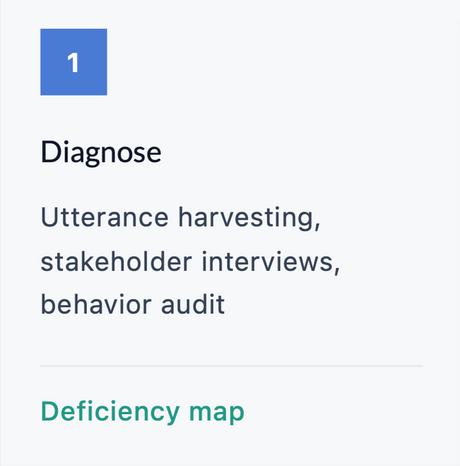
Sales reps asked the AI assistant for a client’s address and got the wrong one, or nothing. Each client record held two addresses: the corporate HQ and the site where the work happened. In the dataset, both were labeled simply “address.”
Why it happened
To the model, the two addresses were interchangeable. A person could tell them apart from context; the model only had the label. The AI wasn’t failing. The data gave it no way to be right.
What I changed
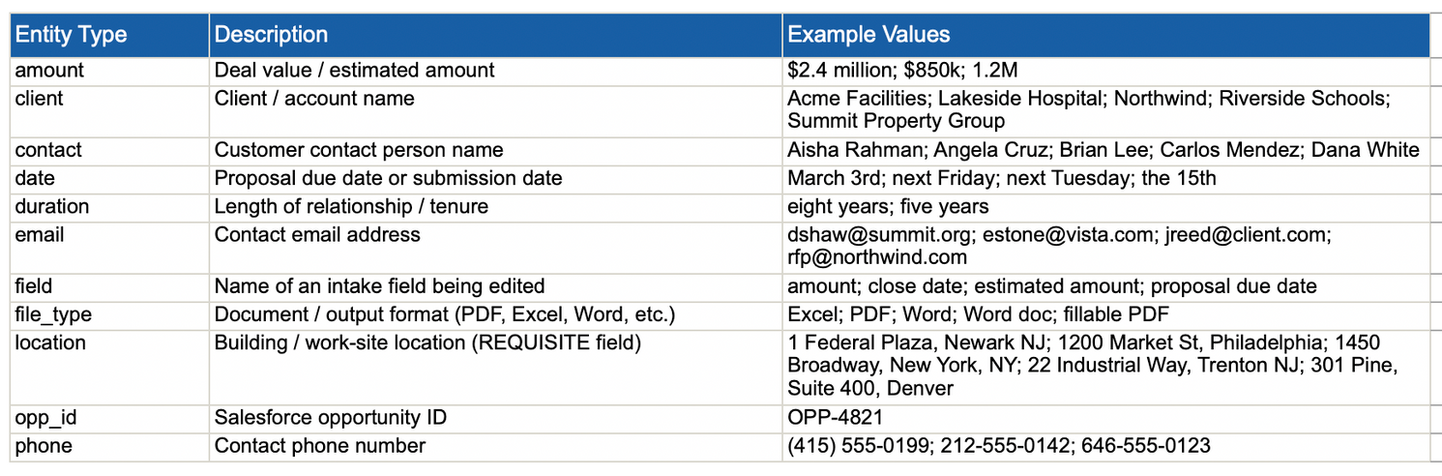
- Data: relabeled the fields as Corporate Address and Site Address.
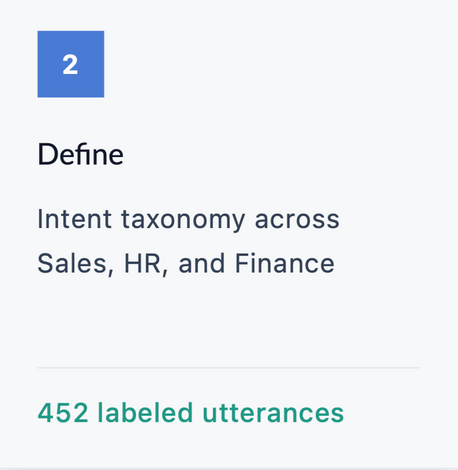
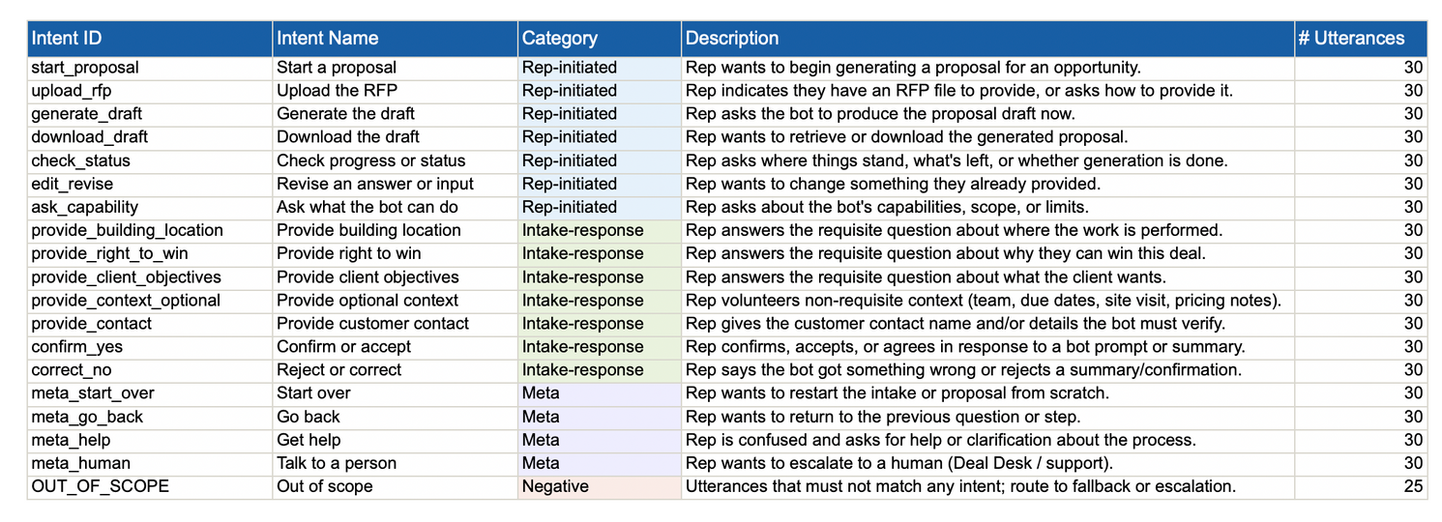
- Intent mapping: separated the two requests so the bot could tell “where’s their HQ” from “where’s the job.”
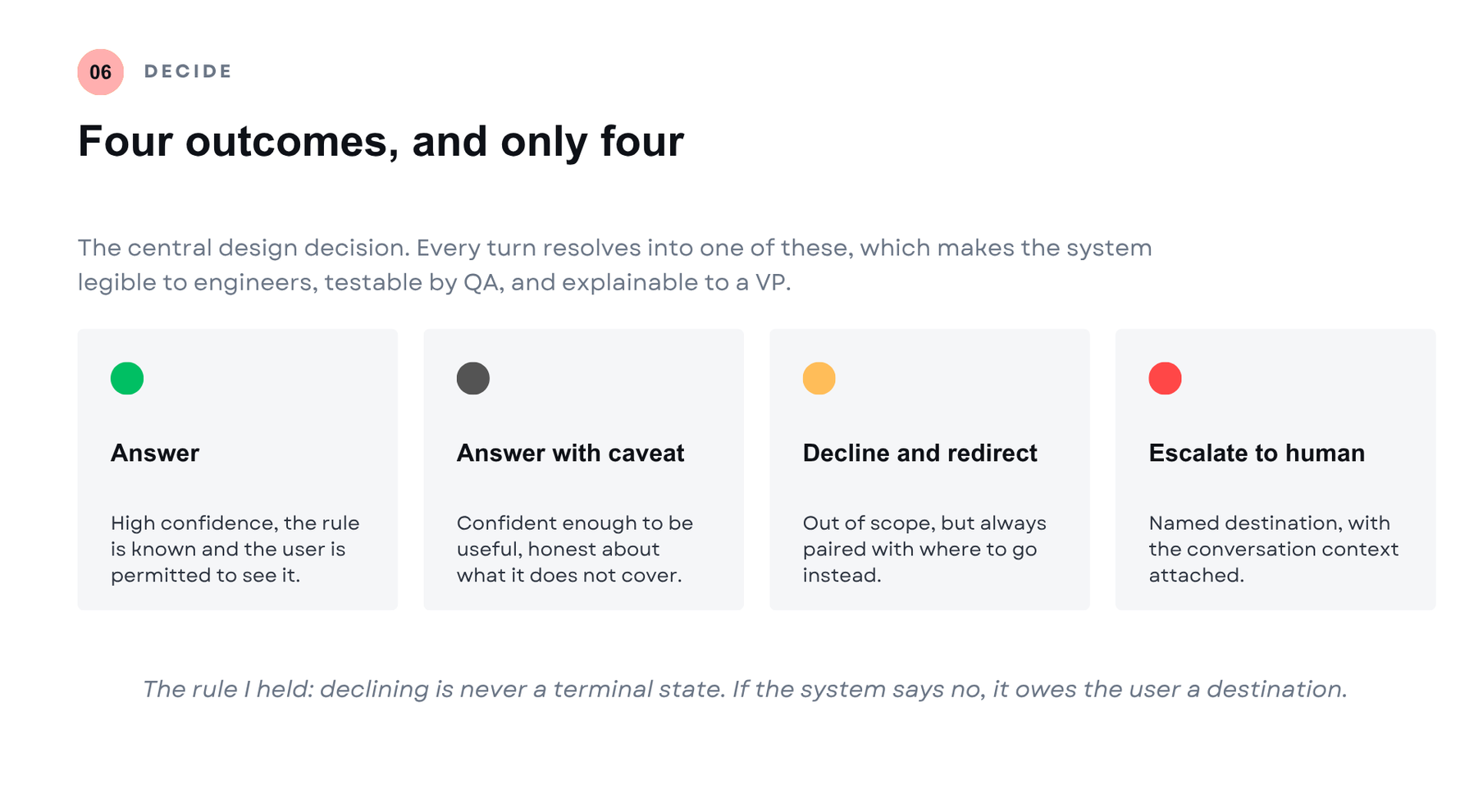
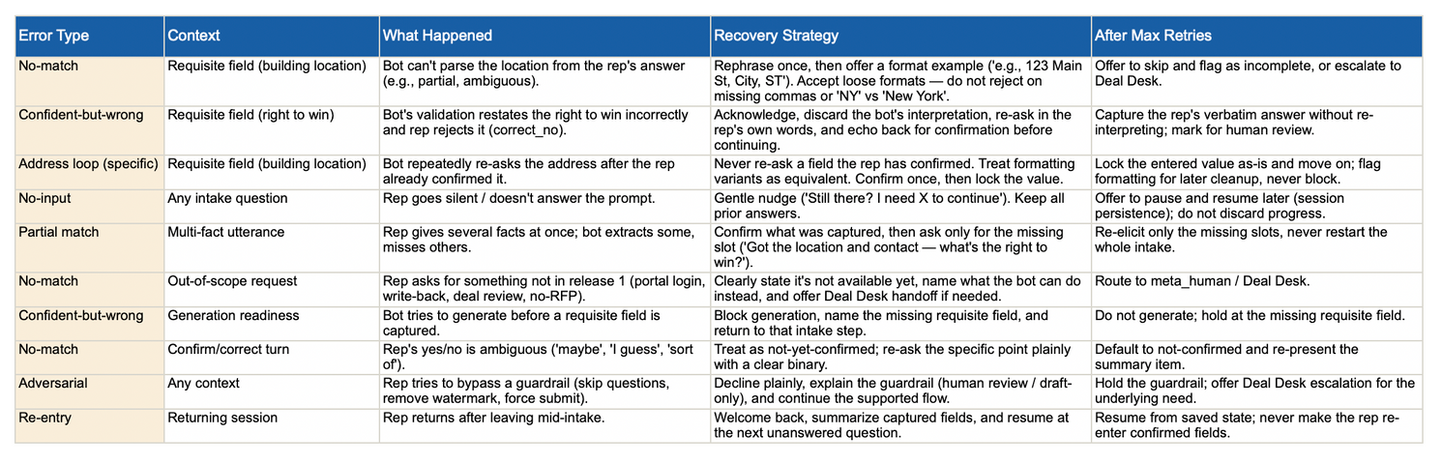
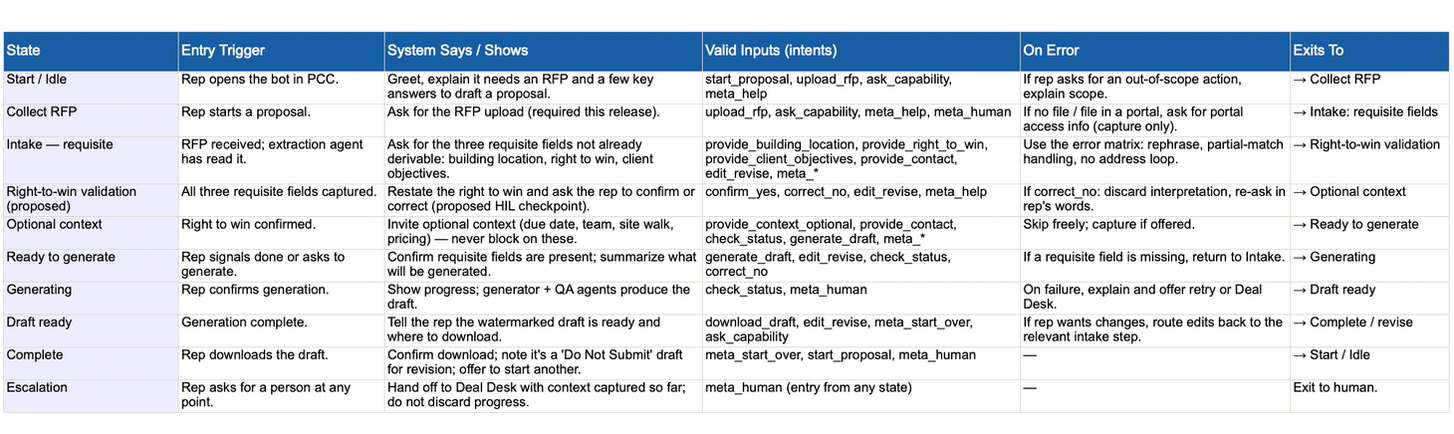
- Responses: when a rep asked for “the address” without specifying, the bot asked which one instead of guessing. A quick question costs seconds; a confidently wrong address could send someone to the wrong place.
Outcome
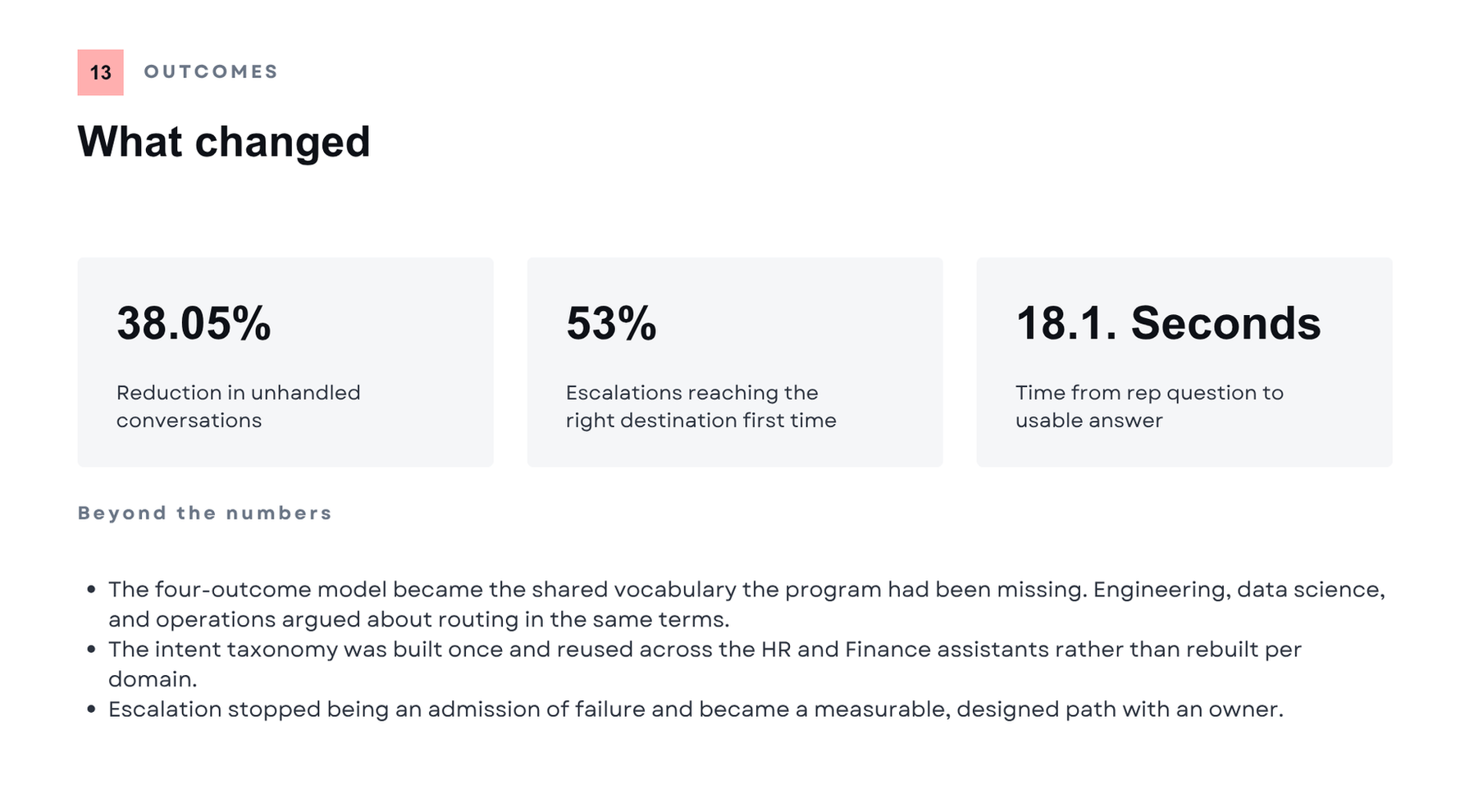
We tested the changes with sales reps, who said the responses improved and the chatbot seemed smarter. Executive leadership’s feedback was positive. The model never changed, only the data and design around it.
Conversational flow
The rule-based, deterministic layer. Triggered by an intent, the virtual agent follows a scripted branch you author exactly how the bot responds. No ambiguity, no improvisation. Every reply is mapped, reviewed, and version-controlled before it reaches a customer.

AI search & RAG
Content comes from knowledge base articles; phrasing comes from the LLM summarizing them. You author what lives in the KB, not the reply itself. This separates truth (curated articles) from voice (model-generated prose), keeping answers grounded and editable.

Generative actions
Generative responses bounded by prompts and guardrails. The model composes within constraints: tone, length, approved topics never freewheeling. Guardrails are authored alongside the prompt, so every generative path has a defined edge it cannot cross.

Intent routing
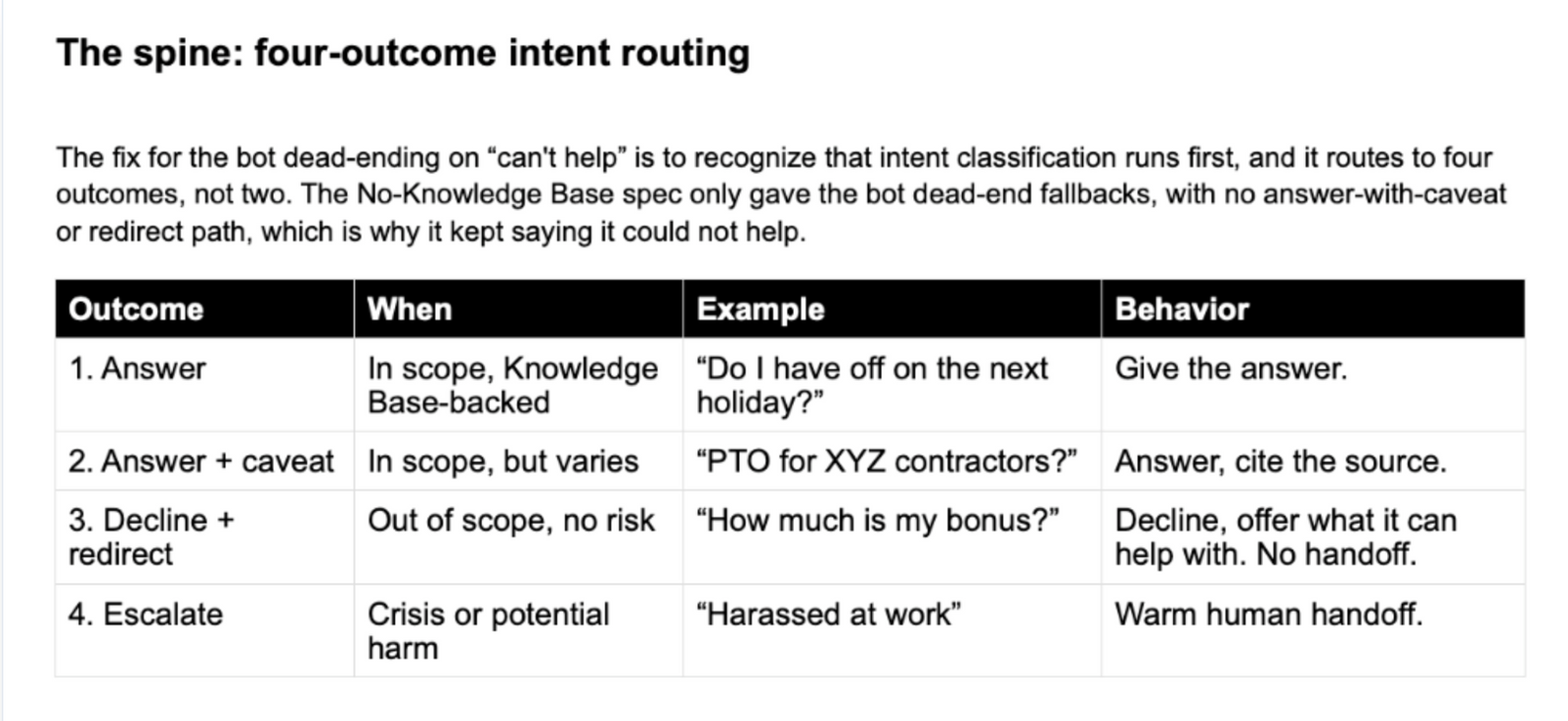
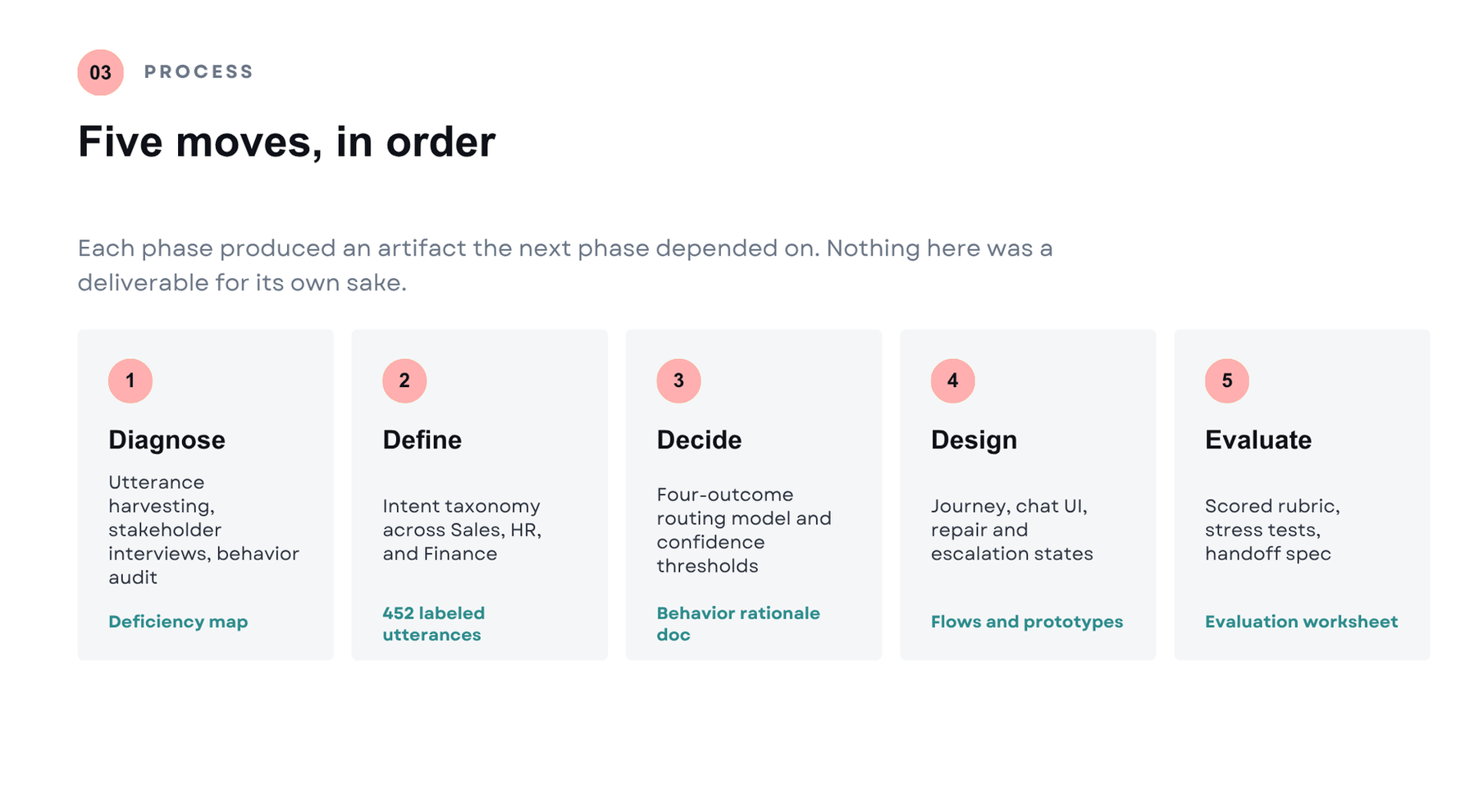
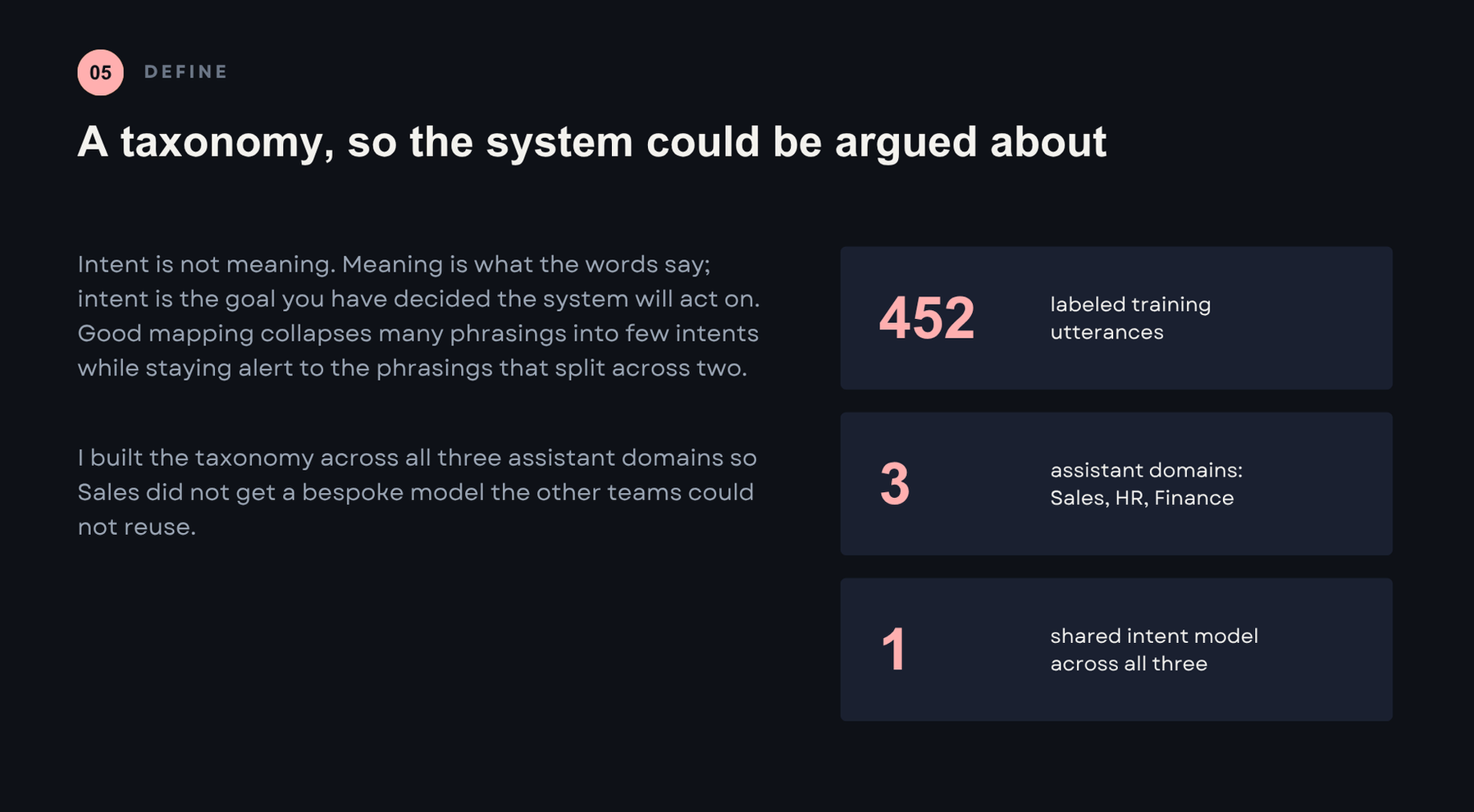
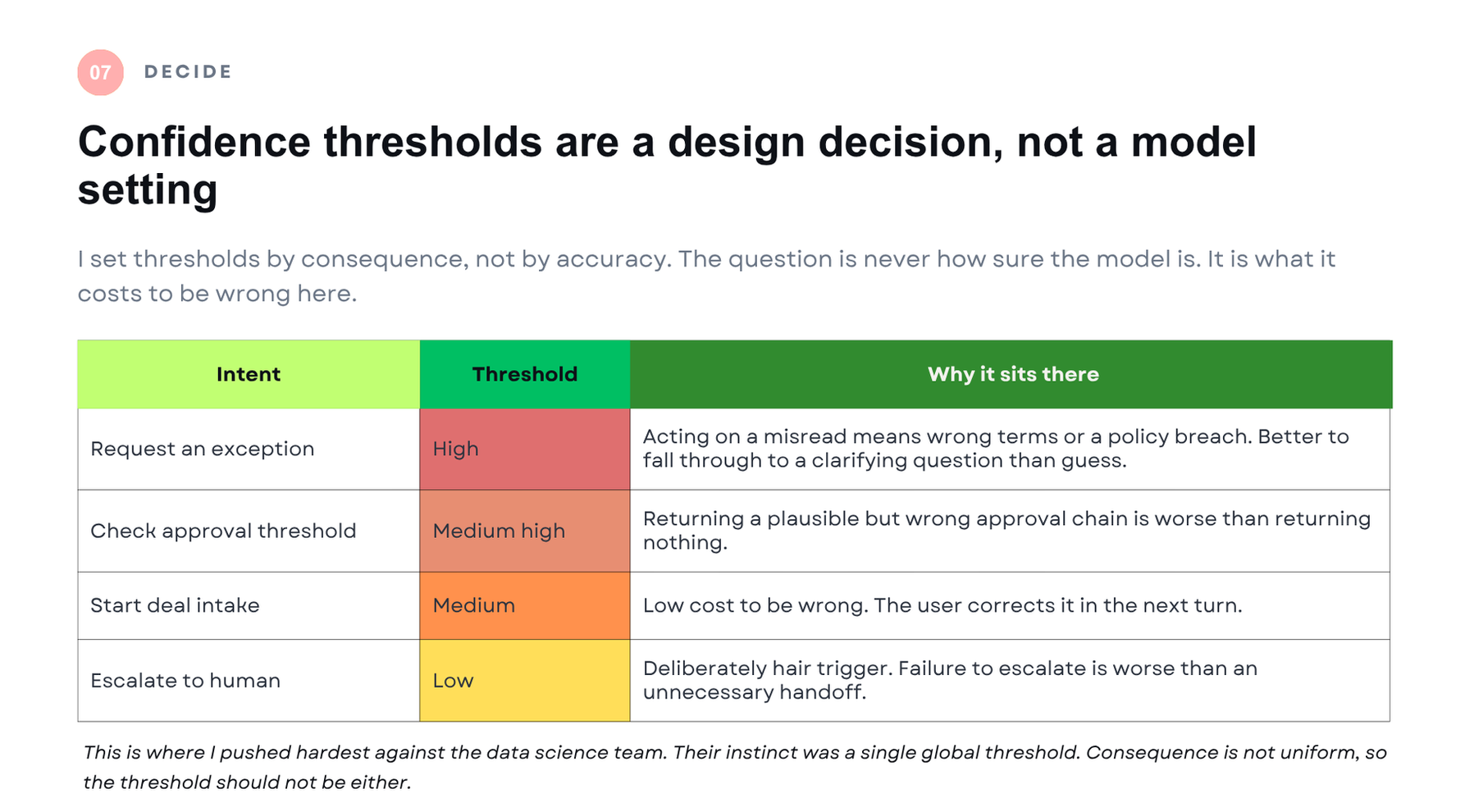
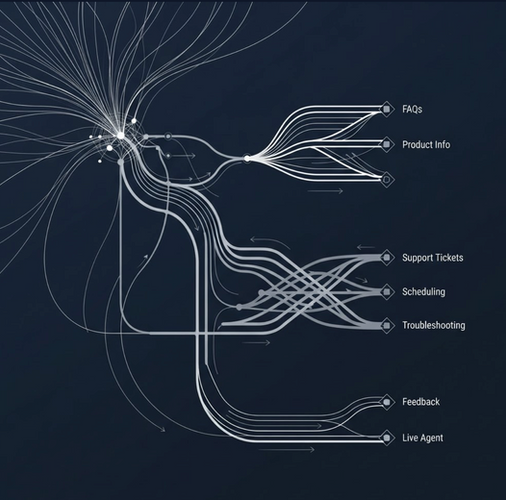
Every conversation begins with detecting what the user actually needs. The system classifies intent across hundreds of trained categories, then routes each one to the mechanism best suited to resolve it : deterministic flow, knowledge search, or generative response.
Response governance
No response reaches a customer without passing through guardrails. Prompts are bounded, topics are constrained, and every generative path has a defined edge. Governance is authored alongside the prompt, not bolted on after.

Human escalation
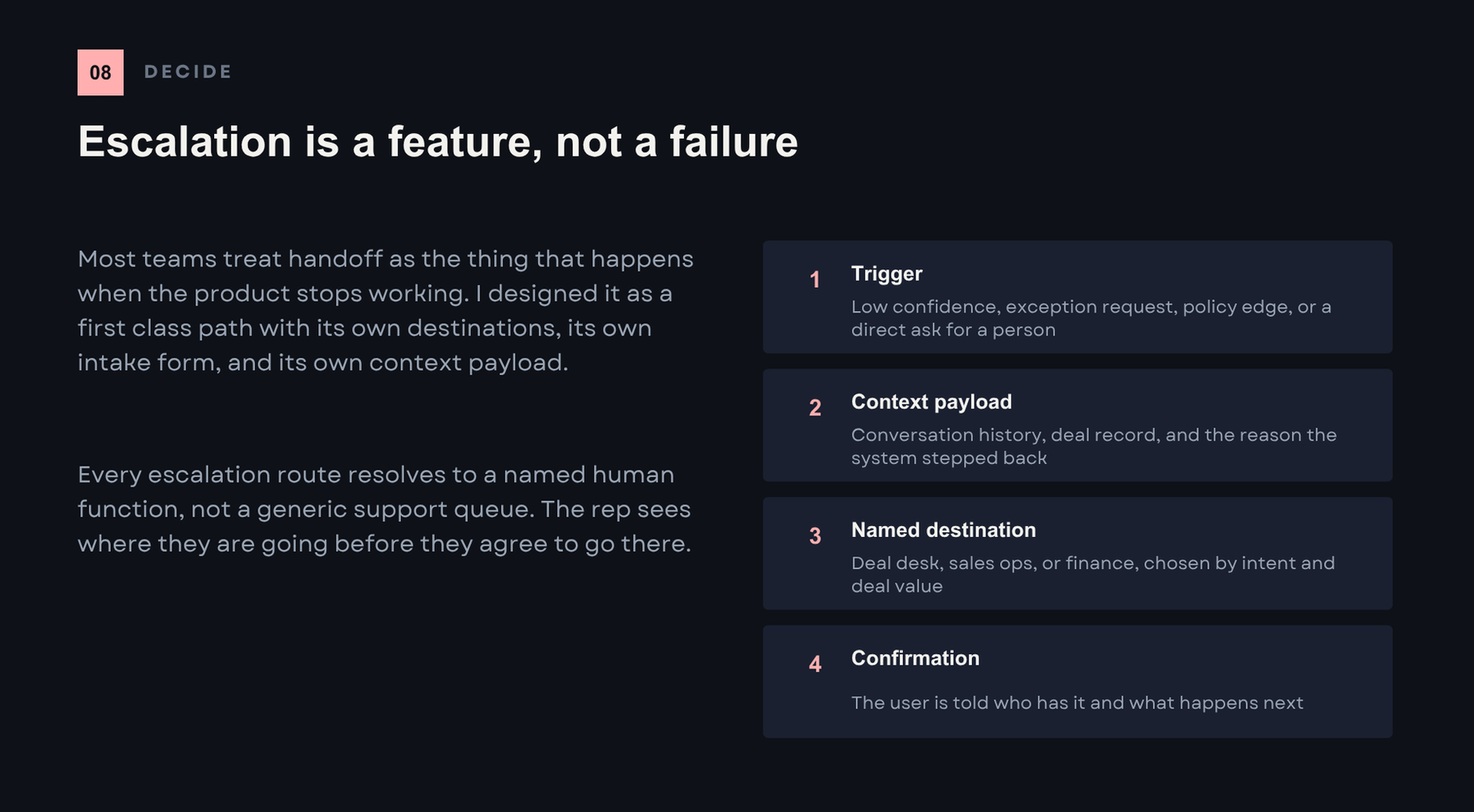
When confidence drops or the request exceeds the bot’s scope, the conversation routes to a human agent with full context. The handoff is seamless: the transcript, attempted resolution, and escalation reason all travel with it.

What I would do differently
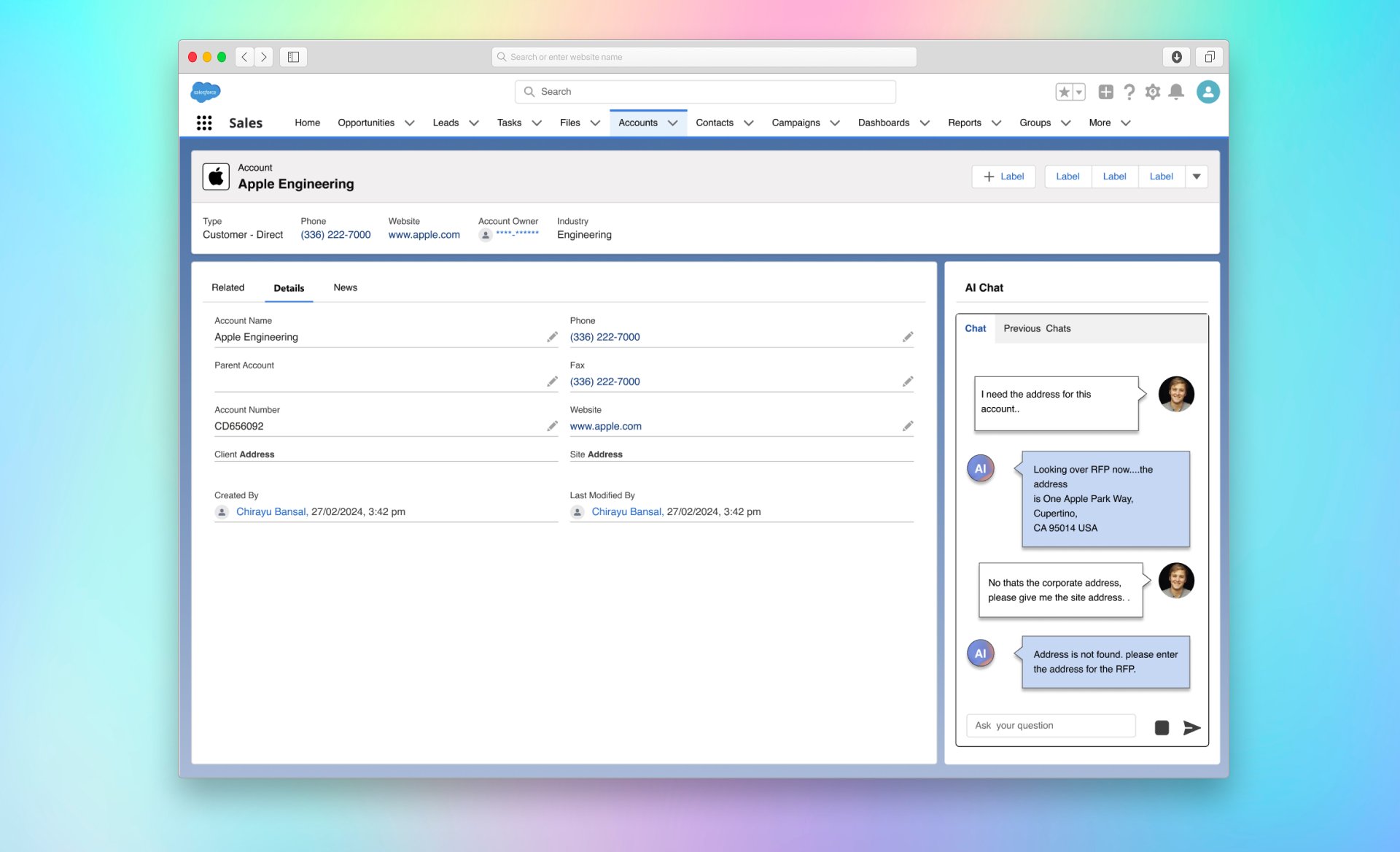
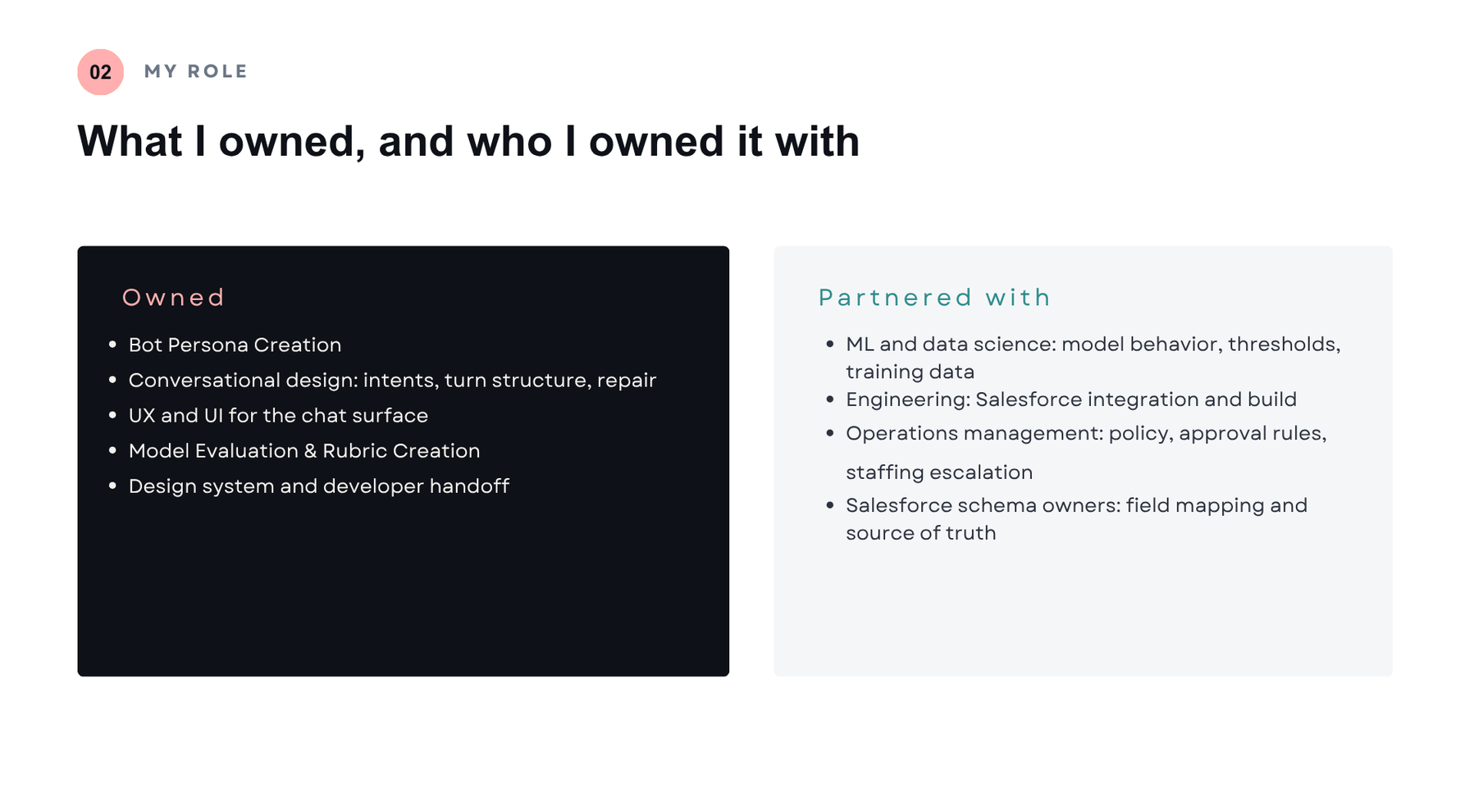
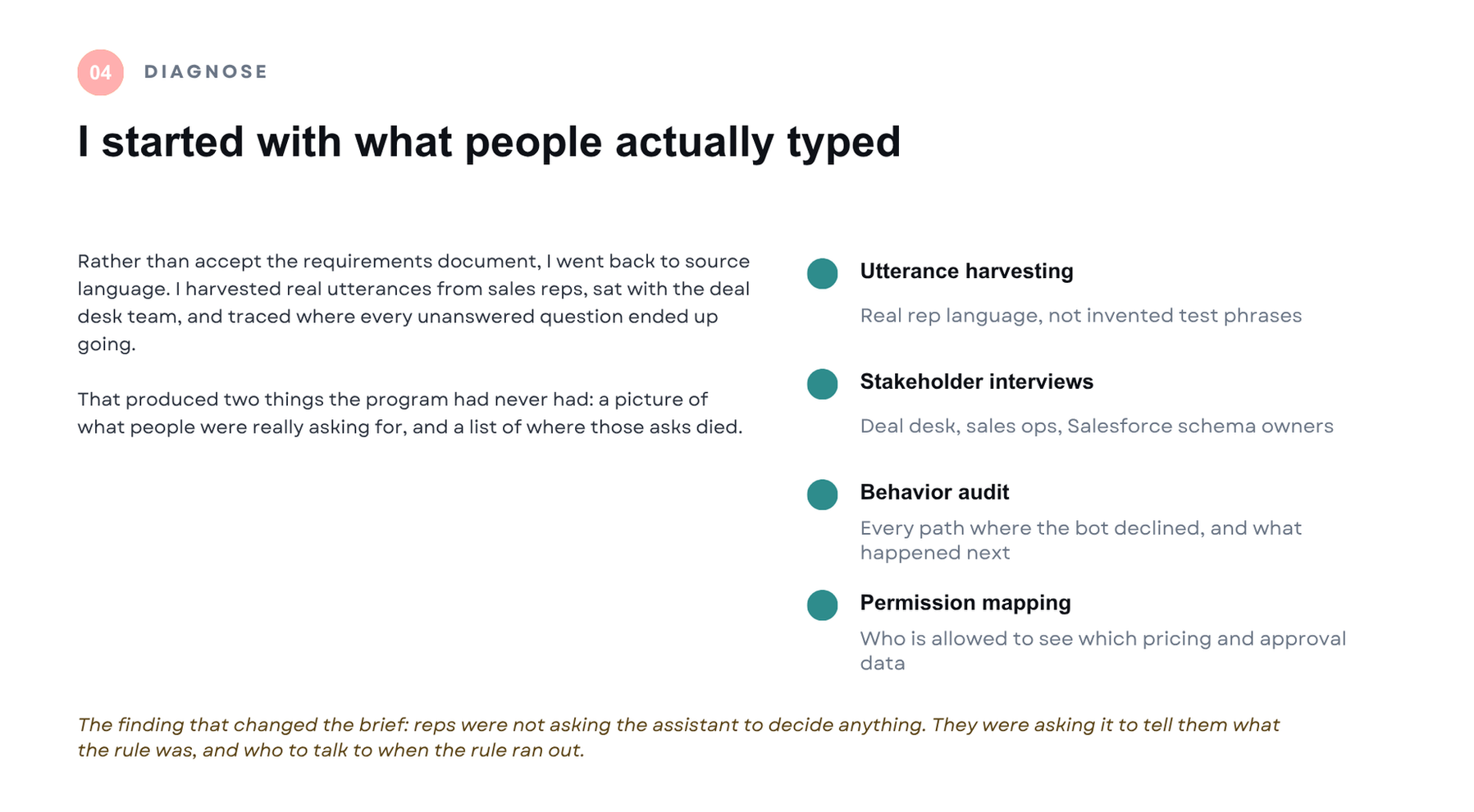
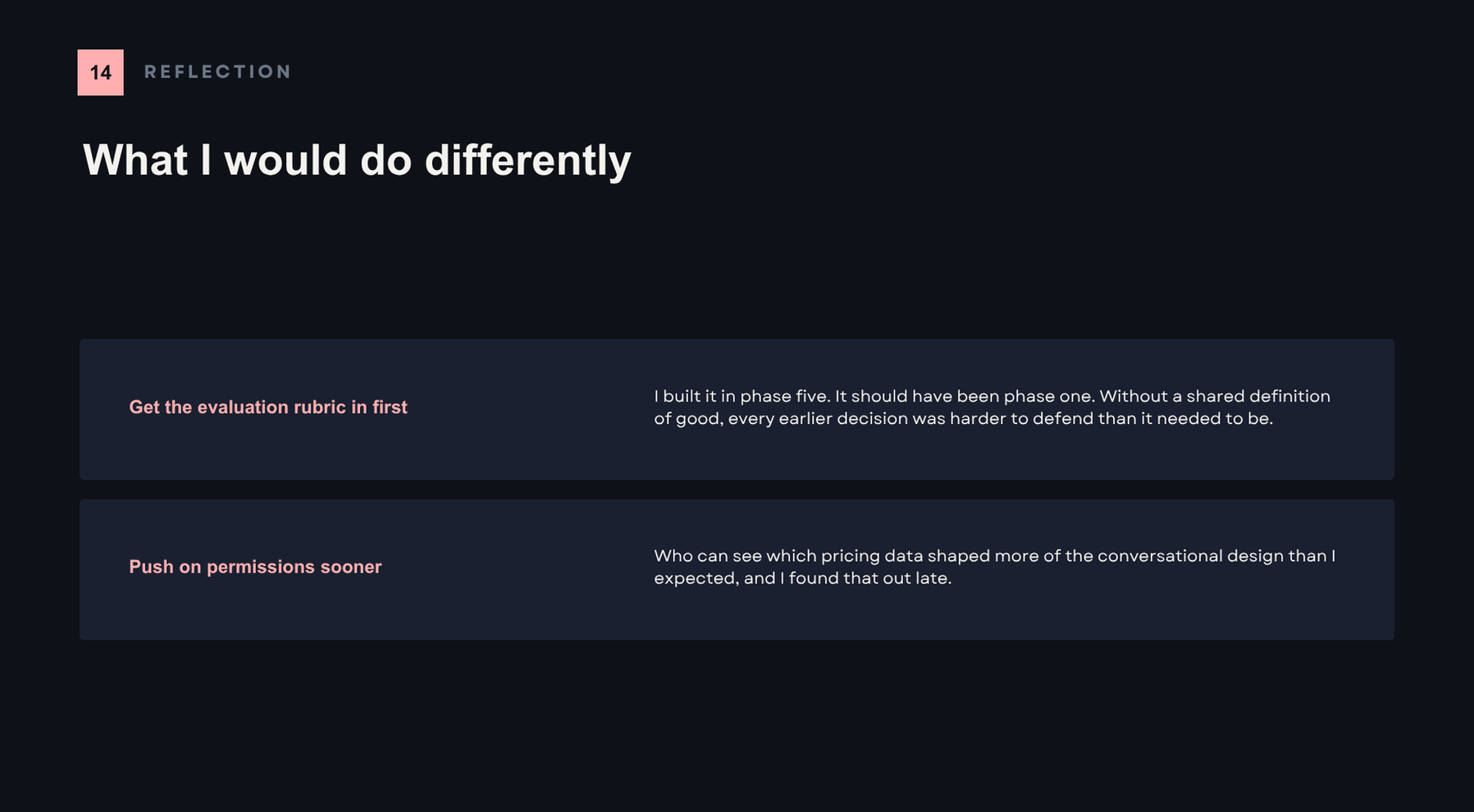
Most user feedback reached me through spreadsheets. They showed what went wrong, but not the situation around it: what the rep was trying to do, how they phrased the question, and what they did when the answer was wrong. Next time I’d push for direct access to the sales team, through short interviews or by shadowing reps while they use the tool. A rep saying no, I meant the job site tells you far more than a row marked wrong address.
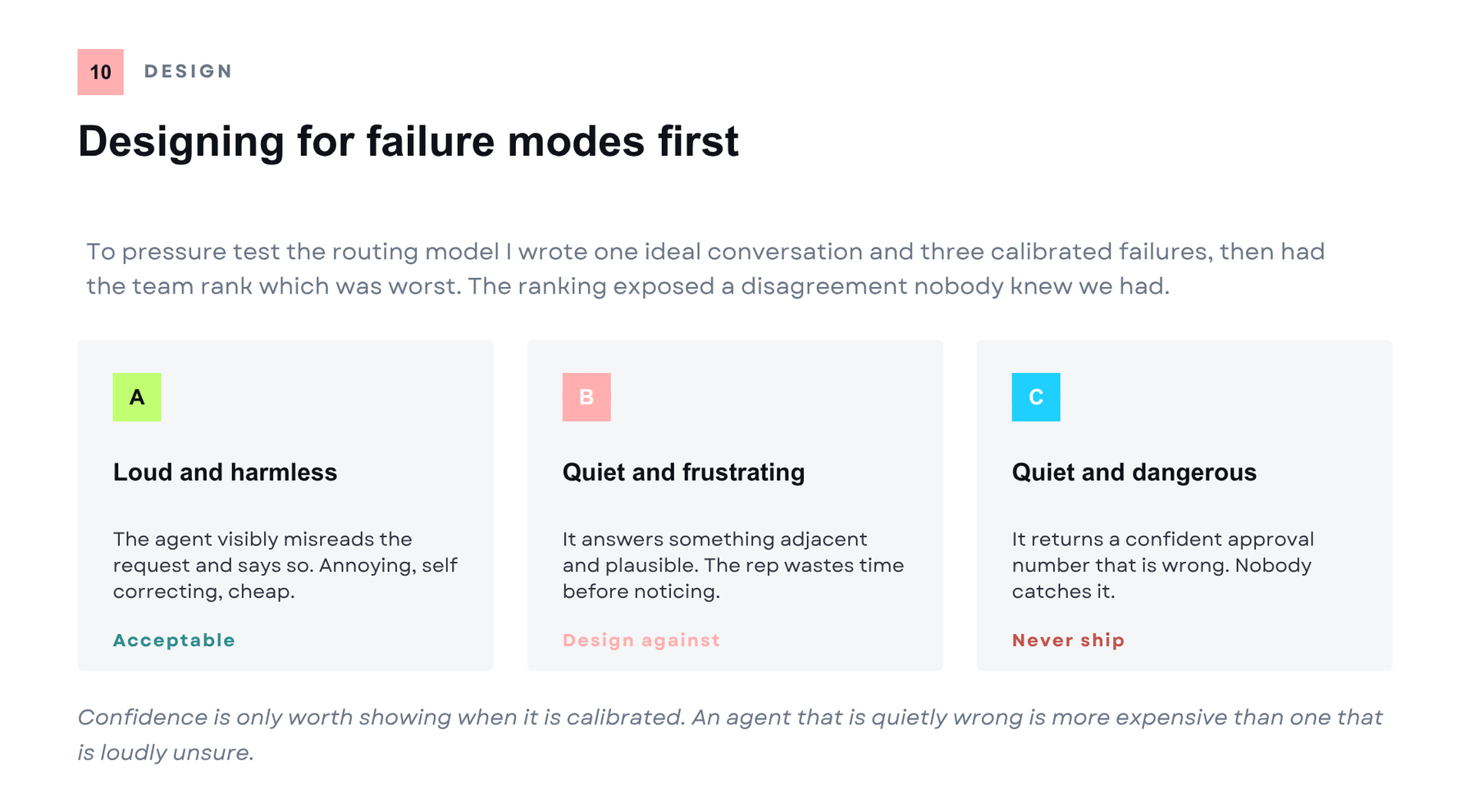
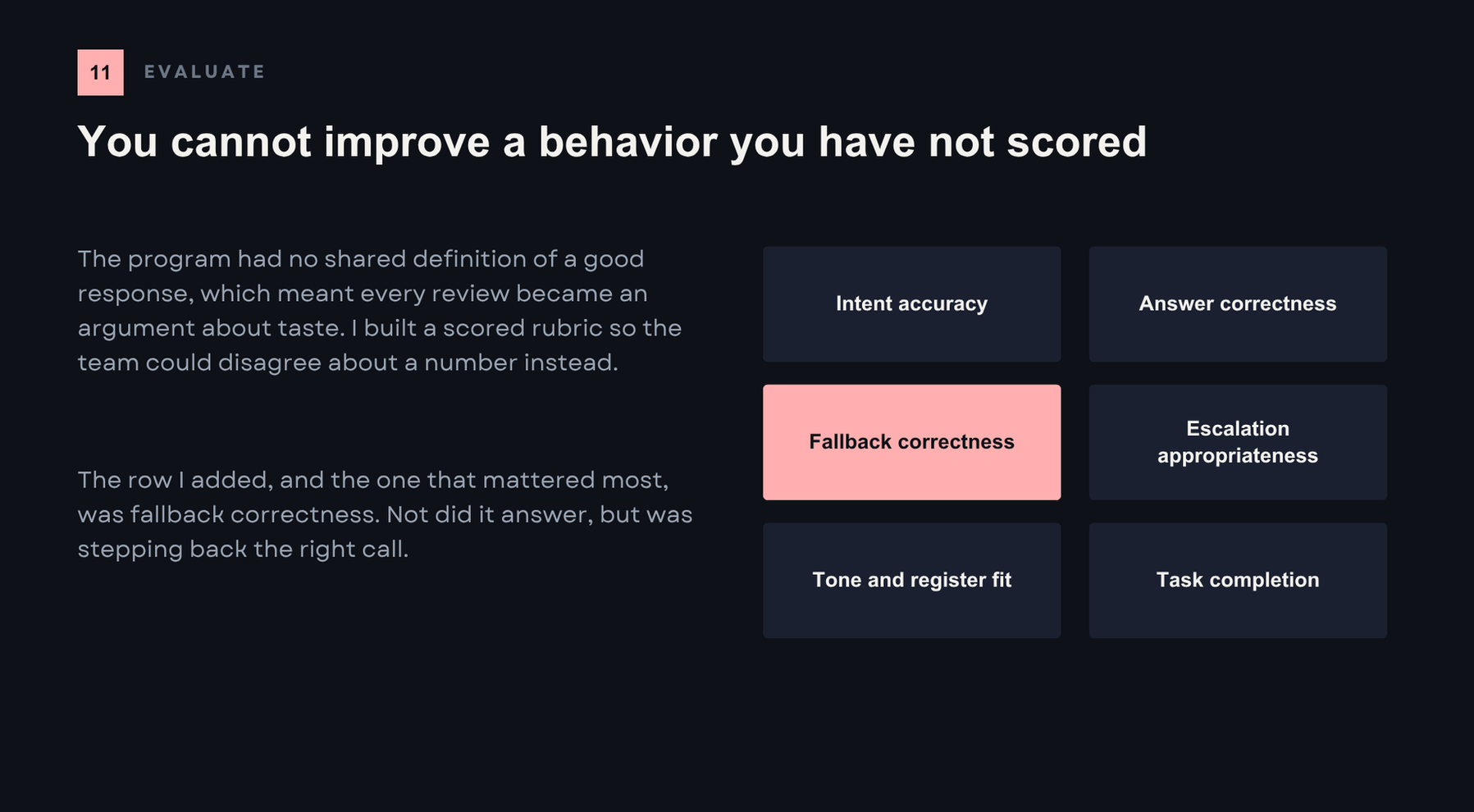
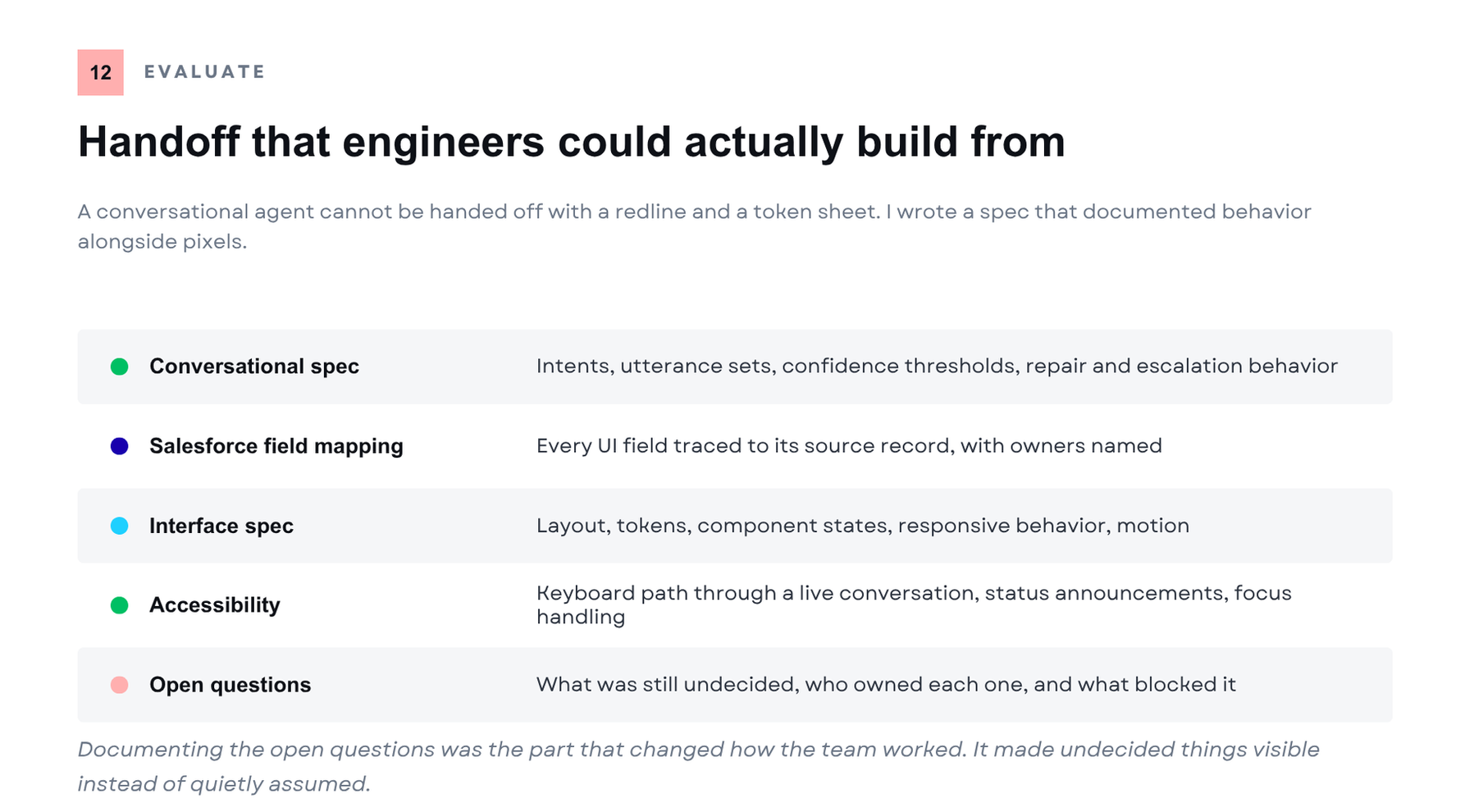
Examples of input mapping, utterances, error handling and recovery modes

Making use of digital space
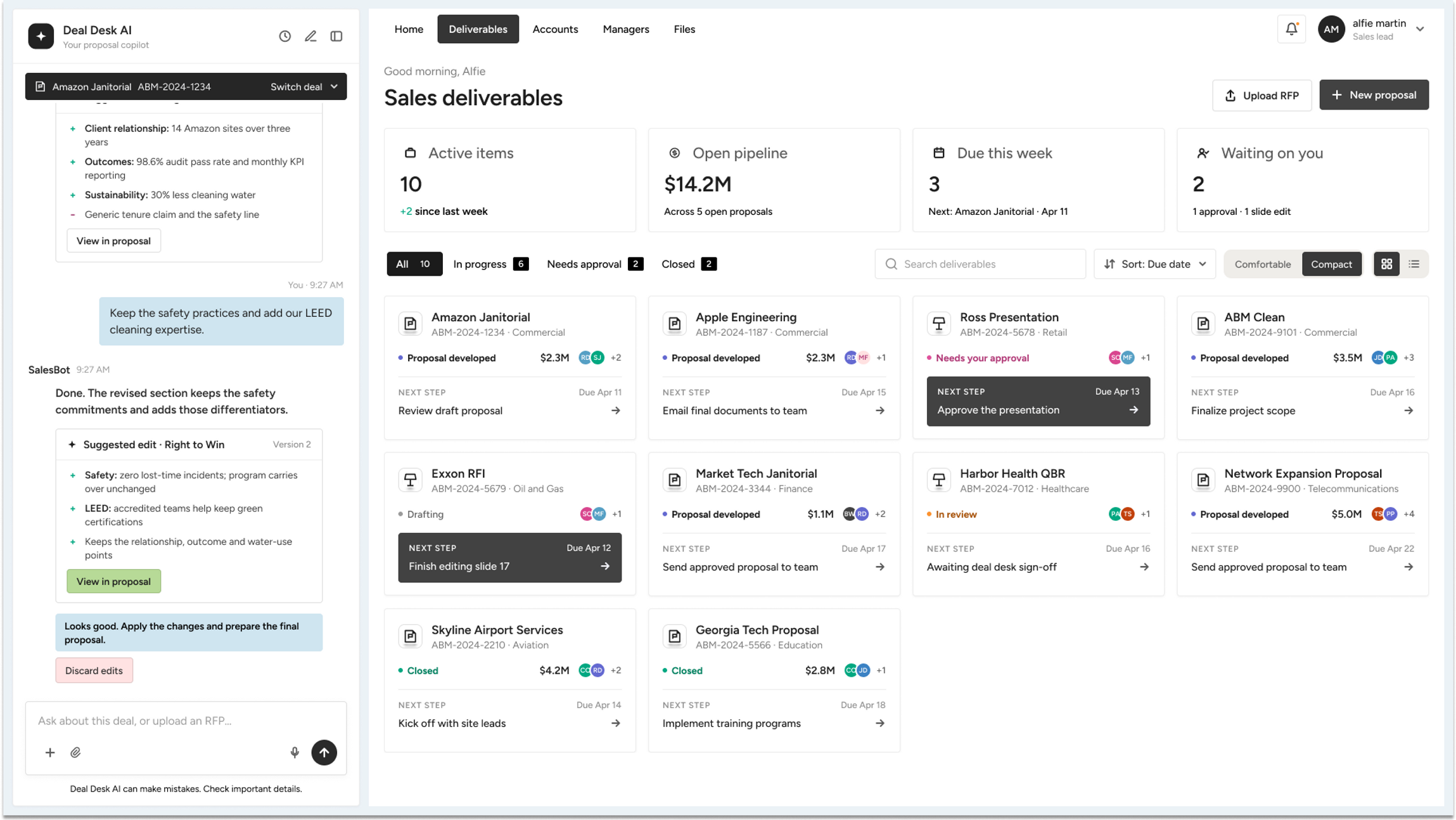
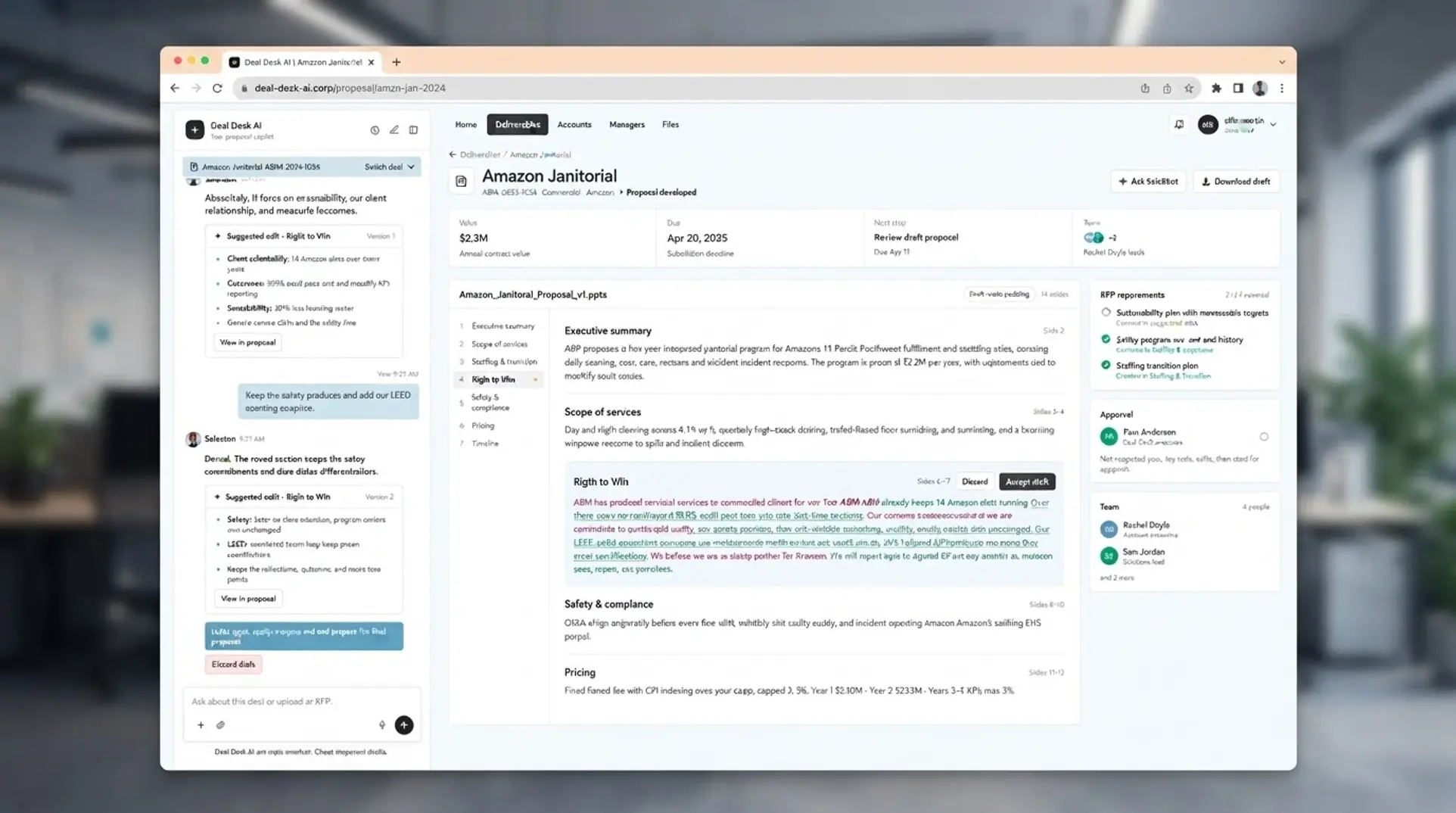
We decided the client cards took up too much real estate on the sales dashboard based on feedback from the sales team. We gave users the option to filter out their accounts to make the UI less overwhelming for sales teams. Below is the light mode version of what we decided on.